
A Passport Is Not Enough
On Restore Britain, denaturalisation, and what happens when no one stops the escalation.

Rupert Lowe sits in Parliament as the MP for Great Yarmouth. He won that seat under Reform, until Reform removed him. The falling out was spectacular. Reform’s chairman alleged that Lowe had made threats of violence. Armed police arrived at Lowe’s Cotswolds farm at half past nine on a Friday night in March 2025, three vehicles, four officers, and seized his firearms. The collection was substantial enough that a wheelbarrow was required to move it. The Crown Prosecution Service later found insufficient evidence to charge him with anything, and the guns were returned. Lowe posed for a photograph with them. The same day he announced their return, he also celebrated the release from prison of Lucy Connolly, jailed for inciting racial hatred during the Southport riots. A good day, he wrote.
This is the man who did not quietly retire after Reform expelled him. He started his own movement. It is called Restore Britain, and its core position is that a British passport does not make you British.
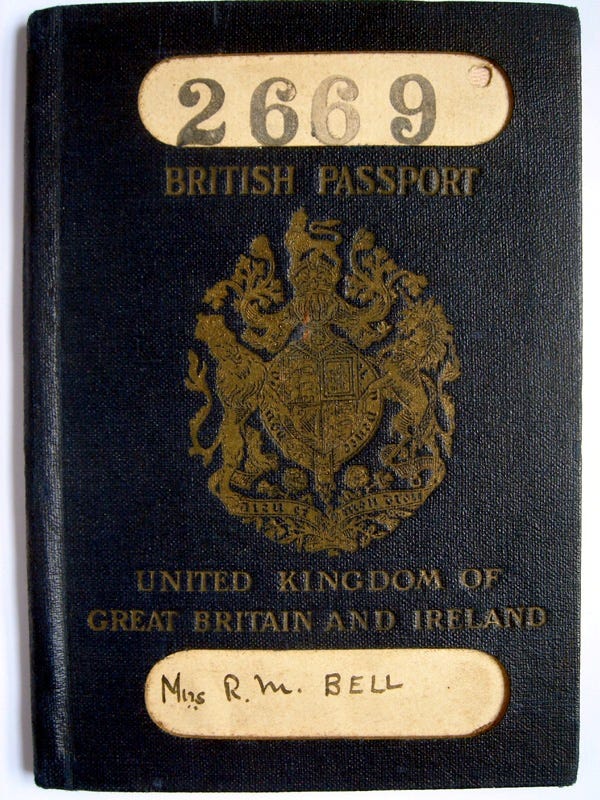
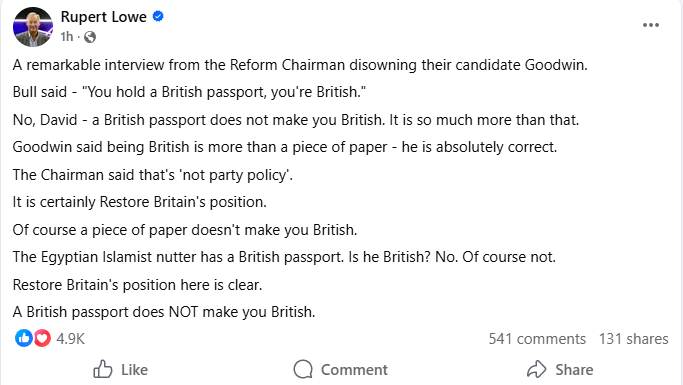
Today, Lowe posted on Facebook to endorse that position against his former party’s chairman, who had said the opposite: hold a British passport, you are British. Lowe disagreed. His evidence was Alaa Abd el-Fattah, the British-Egyptian pro-democracy activist who spent fourteen years in Egyptian prison, most of it for the crime of sharing a Facebook post critical of the Sisi government. When Abd el-Fattah returned to Britain in December 2025, old social media posts surfaced containing inflammatory language about Zionists and police, written between 2010 and 2013. He apologised for them. That apology did not reach Lowe. “The Egyptian Islamist nutter,” he wrote, holds a British passport. Is he British? No. Of course not.
Note what Lowe has done here. He has taken a man imprisoned by an authoritarian state for opposing it, elided his political history entirely, attached the label “Islamist,” and used him as the self-evident case for stripping citizenship from people who fail a test of authentic Britishness. The posts were ugly. The characterisation of Abd el-Fattah as an Islamist is simply false. But the specific target matters less than what Lowe is constructing around him.
Once you accept that legal citizenship can be overridden by a judgement about authentic belonging, you have not made a point about one man. You have created a mechanism. The question that immediately follows is not “is this person British?” It is “who decides, by what standard, and with what power to act on the conclusion?”
The Nazis did not invent this question. They inherited it. The Nuremberg Laws of 1935 formalised a principle that had been circulating in respectable German discourse for years: that legal citizenship and genuine membership of the national community were separate things, and that Jews, whatever their papers said, belonged to the second category. The laws gave that principle teeth. Denaturalisation followed. Then everything that followed from that.
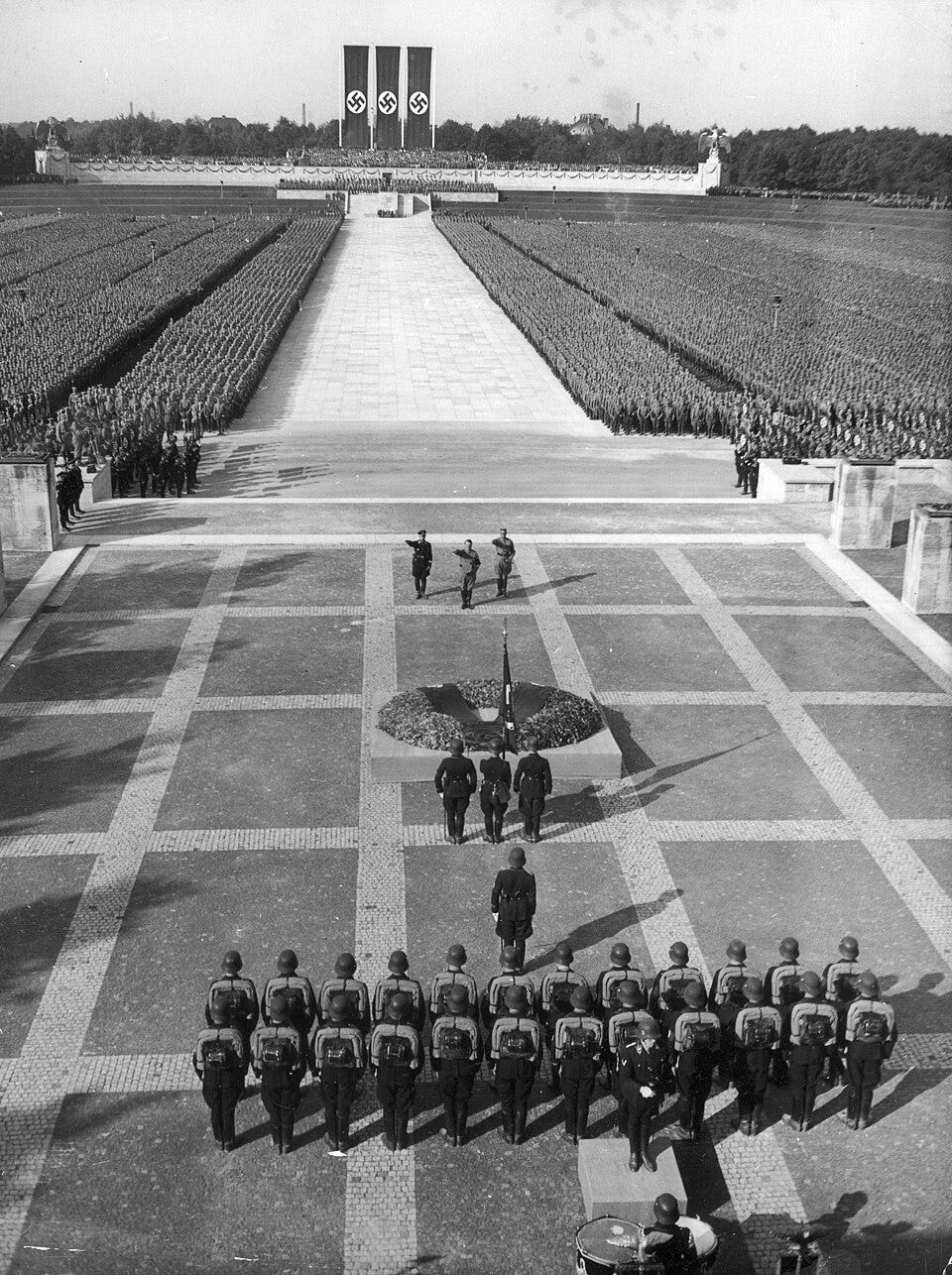
Abd el-Fattah performs exactly the same function as those early categories. He is supposed to be so obviously Other that the principle seems self-evident, barely requiring argument. You start with the easy case. You do not have to defend the mechanism, only apply it. And once the mechanism exists, it does not stay pointed at its original target.
A power to determine who is genuinely British, regardless of legal status, will not remain a power used only against people with controversial social media histories. It will reach political enemies, dual nationals, people with foreign spouses, people whose parents arrived from elsewhere, people who dissent with sufficient force. Every state that has built this architecture has used it that way. Not as an aberration. As the logic of the thing.
There is an additional detail worth holding. Abd el-Fattah’s British citizenship came through his mother, a route that bypasses the standard good character test. Conservatives and Reform both called for his deportation on the basis of those old posts. The machinery for stripping citizenship already exists. Lowe is not proposing something from scratch. He is pointing at that machinery and arguing it should be used more freely, on a broader category of people, by a movement whose definition of authentic Britishness has no fixed boundary.
Lowe has a parliamentary platform. Restore Britain, registered as a party only this month, claims 100,000 members. Whether that figure is accurate matters less than what it signals: a constituency that considers Reform too timid. Searchlight reports that overt fascists are flooding toward it, celebrating Lowe as the only MP openly espousing an ethno-nationalist position. He is not unaware of this. The rhetoric hardens by the week. The unsayable gets said, then said louder, then written into a 133-page policy document. This is what unchallenged escalation looks like. Not a man uncertain about where he is heading, but a man who has learned there is nothing in his way.
That is not a fringe eccentric sounding off. That is an organisational project with a doctrine, a parliamentary platform, and a growing base that includes people who know exactly what the doctrine means. The doctrine has a history. The history does not end well.
The Nazis started with the easy cases too.
Mapping the collision of class struggle and historical trauma. Interrogating the institutions that fail us and the capital that consumes us. This is a chronicle of the wreckage; do not look away.
Fascism is the purest expression of the nation-state paradigm.