
The Wrong Storm
Fifty peers accuse the National Portrait Gallery of lying about Churchill and Bengal. Their own letter is where the errors begin.

Thanks for reading Anti-Capitalist Musings. It is a small operation, and I hope it offers something worth your time. There will be no premium subscriber content here: everything published will remain free to read. If you value these pieces and want to support the writing, buying me a coffee helps fund media subscriptions and the books that keep the analysis grounded. Every contribution, however modest, is genuinely appreciated.
He calls it a barefaced lie, then gets the weather system wrong in the same paragraph. Lord Roberts of Belgravia’s letter to the National Portrait Gallery says Helen Cammock should have done five minutes of research and would have learned the famine “was caused by a typhoon on 16 October 1942.” Typhoons form over the western Pacific. What hit Bengal’s coast that day was a cyclone, native to the Bay of Bengal. Fifty peers signed under that sentence, Churchill’s grandson Lord Soames among them. Not one appears to have checked which ocean produces which storm.


Roberts does not sign as a concerned patron. He signs as Lord Roberts of Belgravia, NPG Trustee 2014 to 21, attaching a title he gave up two years before Cammock’s film was commissioned. Lord Hintze, another signatory, was an NPG trustee until 2021. Both are now helping marshal fifty peers against the current board. Call it concern if that helps. It reads more like former landlords still walking the corridors after the sale, telling new tenants they have hung the pictures wrong.
For a letter so confident about historical truth, its own citation is worth a look. It calls its version well known and widely accepted, then cites exactly one source: the Churchill Project at Hillsdale College, an American institution built to preserve his legacy. Hardly a neutral institution in a dispute about Churchill’s reputation.
Cammock’s film, Persistence, pairs Oliver Cromwell’s campaigns in Ireland with Churchill’s record in India, treating both as starvation chosen rather than suffered. She calls it a creative response to the gallery’s archive, not a documentary, prompted by who an institution chooses to honour. That distinction did not survive contact with fifty peers. The letter’s clinching line says Churchill would not have acted “if he were the genocidal maniac described by Ms Hammock,” which is not her name. Nobody on screen called Churchill a maniac either. The letter answers a charge that exists only in itself, addressed to a woman it cannot spell correctly.
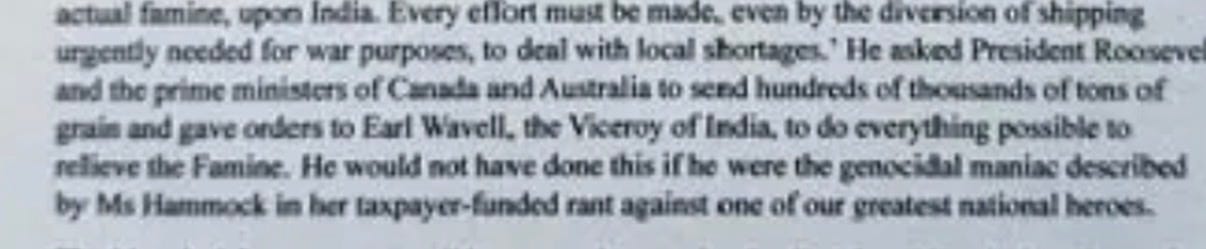
The quote Roberts does offer is genuine. His letter has Churchill telling the war cabinet that wartime pressure had brought conditions bordering on famine, and ordering shipping diverted to address local shortages. That instruction belongs to October 1943, the same month Wavell took over as viceroy with orders to fix what his predecessor had not. It is also the only part of 1943 the letter mentions. What it skips is the year before, when the deaths actually accumulated.
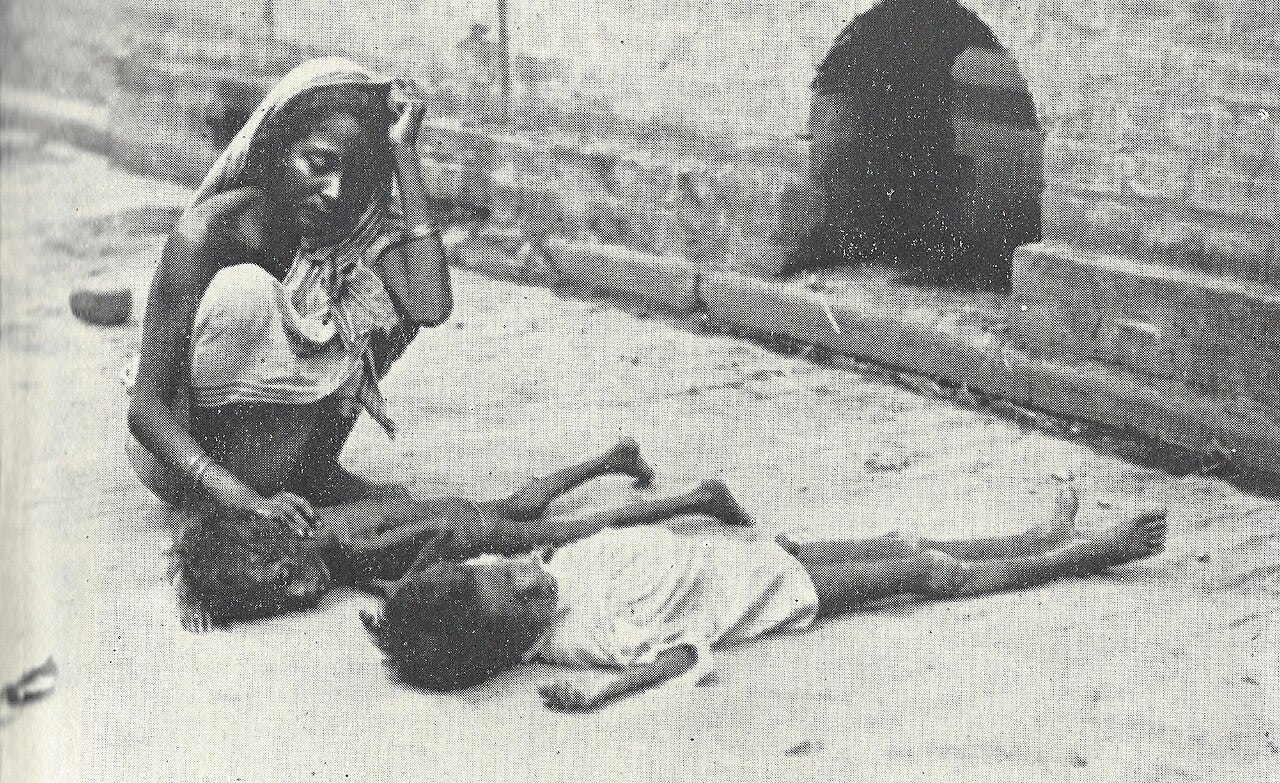
Start the chain in 1942. Madhusree Mukerjee’s Churchill’s Secret War lays out the Denial Policy in detail: of 66,500 registered boats in coastal Bengal, more than two thirds were destroyed or seized against a Japanese invasion that never came, along with bicycles, bullock carts, even a handful of elephants. The police took close to ten thousand bicycles from the district of Midnapore alone. Pinnell, the official sent to implement the policy, later told the Famine Inquiry Commission that destroying the local economy this way was a question that, in his words, “would not have been of any weight at all.” Janam Mukherjee’s Hungry Bengal records a separate piece of his testimony, that nobody had ever explained why the Japanese invasion the policy was meant to prevent had not happened, since there had been “nothing whatsoever to prevent the Japanese from coming whenever they wanted.” In one fishing village near Faridpur, Mukerjee finds, a journalist visiting in December 1943 learned that fifty of two hundred households had died out entirely.
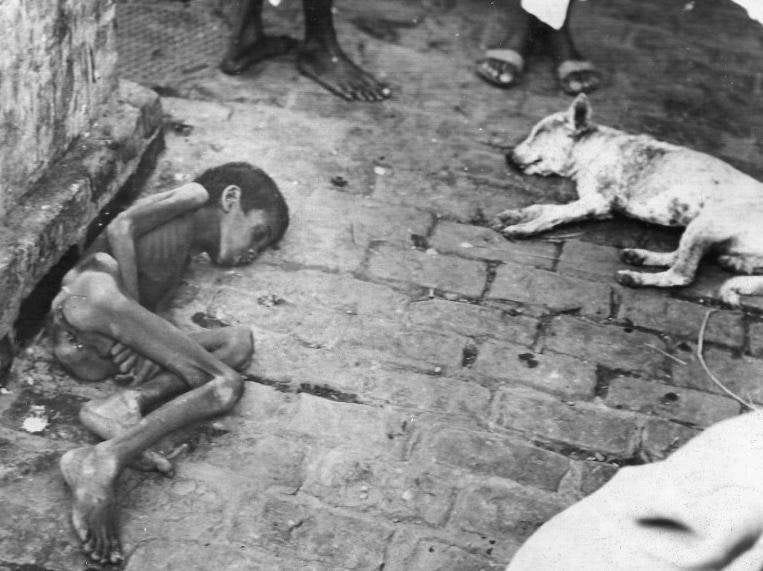
The refusals did not stop with boats. In February 1943, with Gandhi on a public fast and Churchill laid up with pneumonia, Cherwell protested even the shipping committee’s promise of 40,000 tons of wheat against the viceroy’s request for 600,000, arguing in a memo, drawn from the Cherwell papers that Mukerjee cites directly, that the sum would make no conceivable difference to India’s total harvest. Churchill agreed, writing to Leathers, the minister of war transport, that he should be as stiff as he could, since the rest of the empire could stand to “feel the pinch” the same way Britain had. By August, with Amery warning the cabinet that the Indian economy was being strained to breaking point, the cabinet still would not commit to a figure. A Ministry of War Transport paper afterward described the resulting directive as not a precise instruction, since no decision had been taken on whether any wheat would go to India at all. Mukerjee’s reading of the minutes lands on a flat verdict: there had been no commitment to send any relief to India at all.
Here the letter’s own defence collapses. Roberts blames a severe lack of Allied shipping in the region for compounding the disaster. Mukerjee shows in Churchill’s Secret War that the opposite was true by the second half of 1943: so many ships were arriving at North American ports to load cargo for Britain that there was not enough cargo to fill them, a state of affairs the historian Kevin Smith calls a shipping glut, and which the government’s own wartime statistics division referred to at the time as windfall shipping. What this meant is stated plainly enough: for one of the only stretches of the entire war, Britain had more ships than it needed and nowhere it needed them more than Bengal, and spent the surplus restoring white bread to British shelves and stockpiling for a planned Mediterranean campaign instead.
None of this moved Cherwell. By November, with the dying underway, Churchill’s adviser Lord Cherwell urged him to hold the line against relief. He warned that India’s high birth rate would become Britain’s burden, a country that did not, in his words, view hunger with “Asiatic detachment.” Leo Amery, Churchill’s secretary of state for India and no enemy of empire, wrote in his diary that his prime minister was not quite sane on the subject and saw little difference between his outlook and Hitler’s. Churchill is recorded telling the war cabinet that the starvation of “anyhow under-fed Bengalis” mattered less than that of “sturdy Greeks,” and that Indians “breed like rabbits.” Roberts’s letter mentions none of this. It would have been harder to call the film ludicrous if it had.
None of which closes the argument. Roberts’s defenders do have one, only not the one he made. Tariq Ali, who holds no love for Churchill, gives the famine a full chapter and lands closer to negligence, or a refusal to hear his own appointees, than to a deliberate kill order. Janam Mukherjee and Madhusree Mukerjee, who have done the deepest archival work on the famine, do not let Churchill carry it alone, putting the Indian industrialists who profited from the shortage in the frame too, alongside Attlee and Bevin. Whether wilful is right for a policy maintained through contempt rather than chosen as a method of killing is a real historiographical question, one the letter never approaches, since admitting it would mean conceding there is a documented case to argue with rather than a lie to denounce.
Bengal is not even the only file. As home secretary in 1911, Churchill sent troops into Liverpool against a transport strike and positioned the cruiser HMS Antrim in the Mersey, guns turned toward the city, at the Lord Mayor’s request. Nobody disputes that one. It needs no argument about intention, only a record, one that includes a warship aimed at British dockers from a British river. The great Briton of popular memory looks rather different from the one in the archives.
Fifty signatures landed on the gallery’s board within days, on House of Lords stationery, two former trustees among them, a family name for weight. That speed is not available to everyone with a grievance against a museum film. The gallery’s response, backing artistic expression without endorsing what any artist says, reads like an institution trying not to choose a side while hoping nobody notices. The letter also names Disraeli and Rhodes alongside Netanyahu as exponents of violence, then adds that Netanyahu “does not even hang in the Gallery,” conceding without meaning to that one of its grievances has nothing to do with any portrait it owns.
Whether Churchill meant the deaths or merely tolerated them is not settled here, and the historians who have spent careers on the archive have not settled it. What can be settled is smaller. A letter signed by fifty peers, two of them its own former trustees, misnamed the storm and answered a charge nobody made, while quoting the one month, October 1943, in which Churchill looks responsive. By then the vast majority of the famine’s victims were already dead. That is not a defence of Churchill.
Thanks for reading Anti-Capitalist Musings. It is a small operation, and I hope it offers something worth your time. There will be no premium subscriber content here: everything published will remain free to read. If you value these pieces and want to support the writing, buying me a coffee helps fund media subscriptions and the books that keep the analysis grounded. Every contribution, however modest, is genuinely appreciated.
Pretty much par for the course with our upper class. We should remember that they will give us exactly the same consideration that they gave these people at the time, given the smallest chance.