
Cold Comfort
On polar bears, probability curves, and the consolations of wilful ignorance

Isabel Oakeshott thinks she has caught climate science in a lie. The evidence? Polar bears have not conveniently died on schedule.
Strip away the sarcasm and the column reduces to this: a symbol failed to behave like a prophecy, therefore the prophecy was fake, therefore the politics built around it is hysteria.
That is the whole argument. It does not improve on closer inspection.
She files this dispatch from Dubai, a city air-conditioned into existence on the Arabian Gulf. The irony writes itself.
The first problem is scale. There is no such thing as “the polar bear population”. There are 19 recognised subpopulations spread across the Arctic. Some hold steady. Some shrink. Some are barely measured. This is how wildlife works: unevenly, locally, contingently. It does not move in neat moral arcs designed to flatter columnists.
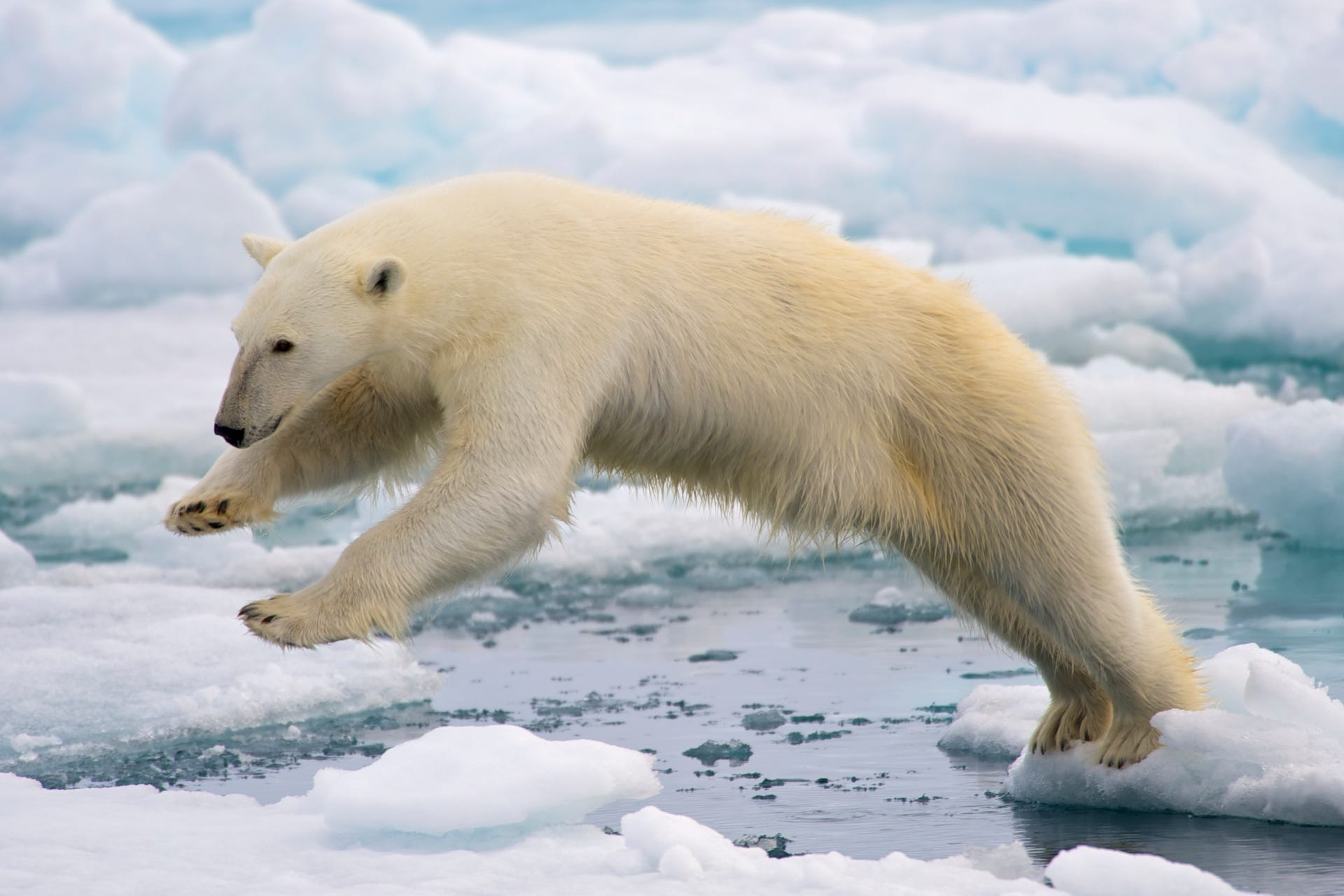
Scientists never claimed every bear would collapse in synchrony. They warned that long-term sea-ice loss raises extinction risk. Risk is not a countdown clock. It is a probability curve. You do not disprove a curve by pointing at a dot.
Oakeshott’s entire piece rests on pretending that climate science promised a cinematic extinction event, then sneering when reality turns out slower, messier, harder to summarise.
The second problem is history. Polar bears crashed in the mid-twentieth century because humans hunted them aggressively. International agreements in the 1970s restricted that hunting. Several populations recovered. Conservation policy worked.
So when Oakeshott celebrates healthy bears1, she celebrates the success of the environmental governance she treats as elite delusion. The rebound is not a gotcha. It is a case study in why coordinated intervention matters.
The column frames resilience as an embarrassment. It is the opposite. Ecosystems respond to pressure and to protection. Both forces operate at once. Ignoring one because the other exists is intellectual laziness.
Then comes Darwin, wheeled in like a courtroom witness. Species adapt, she says, as if evolution were a guarantee rather than a gamble. But adaptation is not an upgrade. It is selection under stress, often a desperate and resource-depleting retreat. A species can adapt and still decline, persisting in smaller numbers, thinner habitats, tighter margins until the margins close entirely.
Evolution is not a promise that everything will be fine. It is a description of how living things cope when everything is not fine. Oakeshott treats it as a magical floor beneath which nothing can fall. Nature offers no such safety net.
The Arctic is warming far faster than the global average. Sea ice is retreating. These are measurements, not vibes. The relevant question is not whether bears can improvise in the short term, but how much cumulative stress a system absorbs before improvisation fails.
Polar bears became symbols because humans think in pictures. A starving animal on a shrinking ice floe compresses a complex model into a single frame. The media simplified the story, and now the backlash performs the same reduction: if the symbol is imperfect, the science must be fraudulent.
This is how culture-war logic eats evidence. Nuance becomes weakness. Conditional statements become broken promises. A field built on probabilities is attacked for failing to deliver certainty.
Bodies like the International Union for Conservation of Nature do not issue prophecies. They publish risk assessments. Those assessments still warn that continued warming increases long-term danger to Arctic ecosystems. That position has not collapsed because one columnist discovered that nature is complicated.
The real sleight of hand in the piece is emotional. It offers relief. Readers are invited to exhale. The world is not ending. The bear is fine. The scolds were wrong. You may return to normal.
But climate risk was never a fairy tale about instant apocalypse. It is a slow accumulation of pressure on food systems, coastlines, water supplies, infrastructure. Polar bears are a vivid entry point, not the ledger itself. Treating their partial resilience as a universal pardon is like declaring a bridge safe because the first crack has not yet split it in half.
The adult conclusion is uncomfortable and therefore unfashionable. Some populations cope. Others struggle. Warming continues. Adaptation buys time but does not erase limits. Conservation helps but does not repeal physics. None of this produces a triumphant headline. All of it remains true.
Oakeshott wants a morality play with a twist ending. Reality is a risk curve that refuses to perform on cue. That is not hysteria. That is the world declining to flatter our appetite for simple stories.
And the bears, inconveniently for everyone, are still caught inside it.
Against capital, against empire, against forgetting.
Notes and essays from the wreckage of the present.
The Svalbard group Oakeshott cites is not typical of the species as a whole. It occupies an unusual ecological niche where bears can switch between hunting on ice and scavenging or feeding on land, which cushions them against sea-ice loss in ways other populations cannot easily replicate. Some individuals have adapted to land-based food sources, but that flexibility sits alongside a second, often omitted factor: strict local hunting restrictions introduced after heavy 20th-century exploitation significantly improved survival rates. In other words, this is a population shaped by a specific mix of ecological opportunity and conservation policy, not a universal model for how all polar bears will fare.
Weird that she thinks retreating sea ice is evidence global warming isn't happening. But that's Telegraph "journalists" for you: complete fuckwits.
I'm ignoring her "science", but happy about the polar bears!